

Schedule: Monday - Saturday: 8:00 - 18:00
(973) 326-9000
Advanced qEEG brain mapping and personalized neurofeedback therapy for children and adolescents in New Jersey.
New Jersey Pediatric Neuroscience Institute now offers pediatric quantitative EEG, also known as qEEG brain mapping, and neurofeedback therapy in New Jersey for children and adolescents with attention, learning, mood, sleep, concussion, epilepsy, and related neurological concerns.
This program is supervised by NJPNI’s pediatric neurology team and designed to give families a non-invasive, child-friendly way to better understand brainwave patterns and support individualized care.
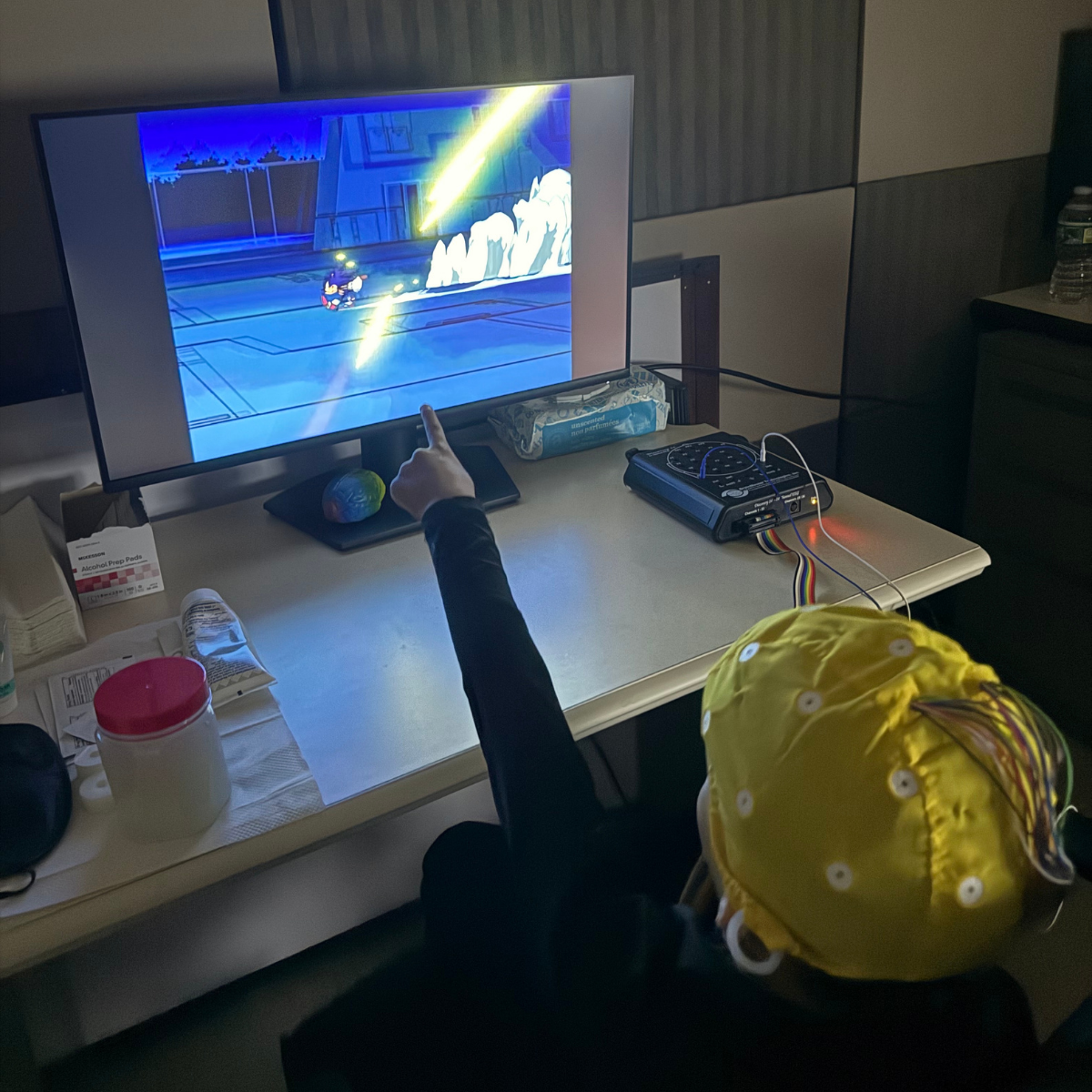
Quantitative EEG, or qEEG, is a non-invasive brain mapping test that records electrical activity across the brain and uses computer-based analysis to identify brainwave patterns.
A standard EEG records brain activity. qEEG adds quantitative analysis, helping the clinical team better understand patterns that may be associated with attention difficulties, seizures, anxiety, sleep concerns, concussion recovery, learning challenges, and other neurological symptoms.
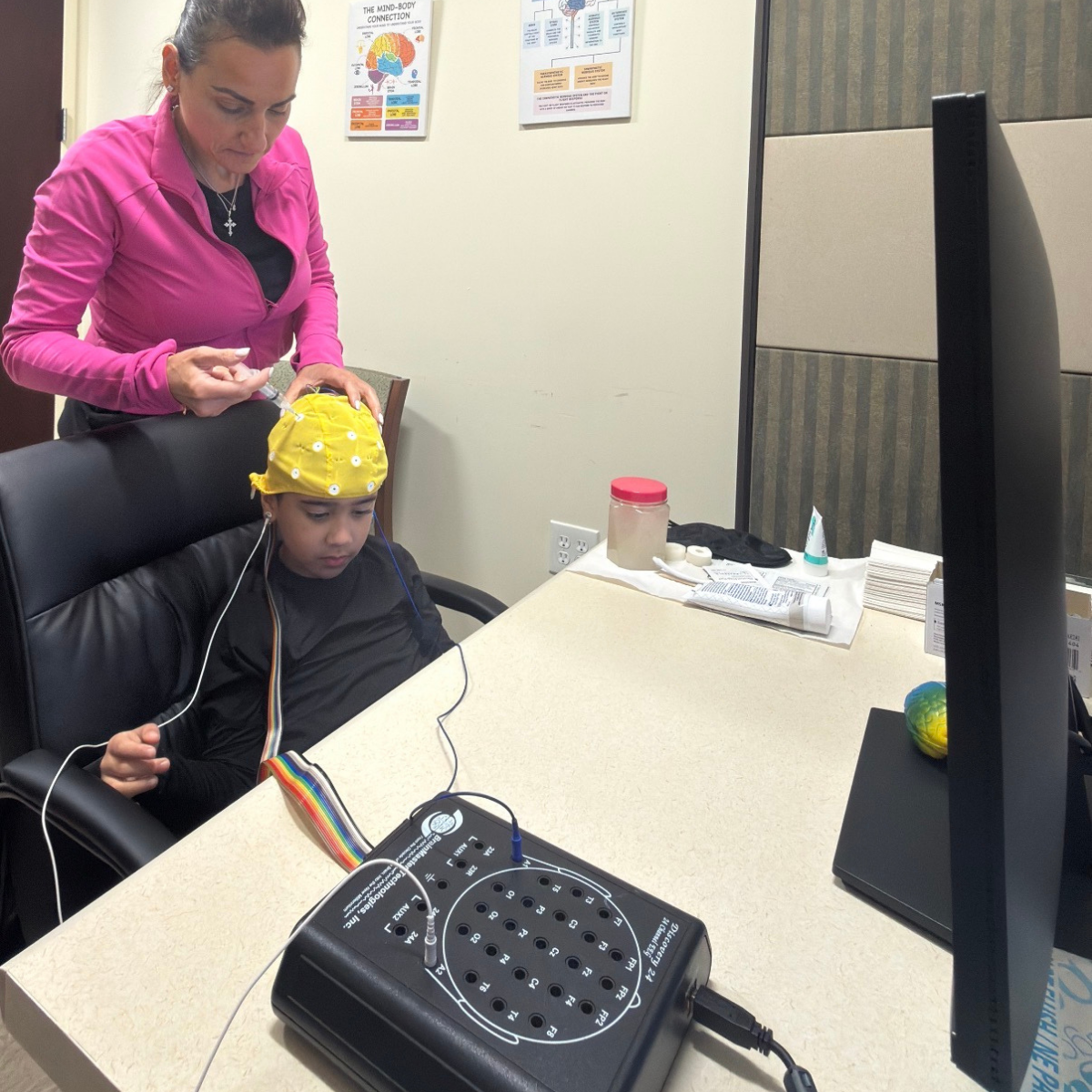
For children, the process is designed to be comfortable. Sensors are placed on the scalp using a cap and gel. There are no needles, no radiation, and no sedation.
Neurofeedback is a form of brain training that uses real-time feedback from brain activity to help teach the brain to self-regulate.
During a session, a child may watch a video, play a game, or listen to audio that responds to their brainwave patterns. When the brain produces desired patterns, the child receives feedback through the video, game, or audio experience.
Neurofeedback is not medication and is not invasive. At NJPNI, it is guided by qEEG results and supervised by pediatric neurology specialists.
Every child’s brain activity pattern is different. NJPNI uses qEEG findings to build a personalized neurofeedback protocol based on the child’s symptoms, diagnosis, age, tolerance, and clinical needs.
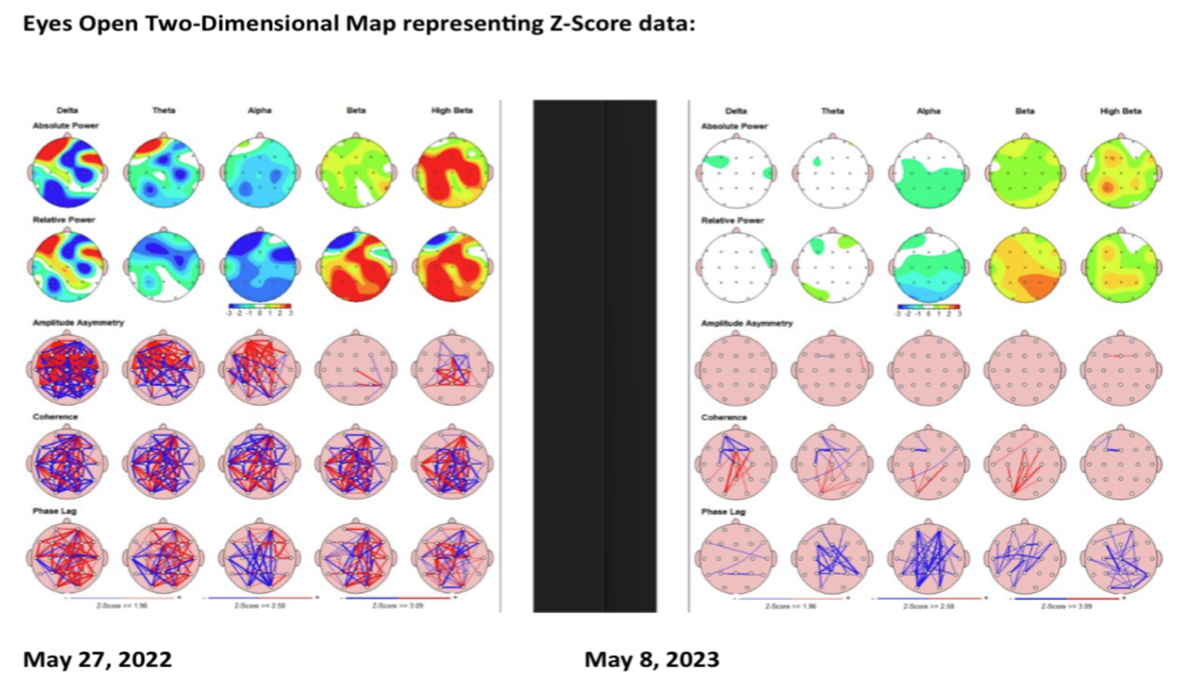
A qEEG brain map can help show how a child’s brain is working with eyes open across different speed bands, including slower waves such as delta and theta and faster waves such as beta.
Warm colors may represent areas with more activity than expected, while cool colors may represent areas with less activity than expected compared with what is typical for the child’s age.
In one example, the first brain map showed many areas where brainwave activity was outside the typical range, which may fit with symptoms such as anxiety, attention problems, dizziness, headaches, and changes in awareness. A later brain map showed a calmer, more balanced pattern, with fewer strong color deviations and less chaotic connectivity between brain areas.
An easy way to think about this is that, at the start, the brain may look like it is stuck on “too loud” or “too quiet” in many places. After neurofeedback training and appropriate medical care, the goal is to help the brain move closer to a “just right” zone so the child can better focus, stay calmer, and support recovery.
qEEG and neurofeedback may be used as part of a broader pediatric neurology care plan for children with a range of neurological, developmental, learning, and regulation concerns.
qEEG may help identify brainwave patterns associated with inattention, focus challenges, and self-regulation difficulties. Neurofeedback may be used to support attention and focus as part of a comprehensive ADHD care plan.
qEEG can provide additional information about seizure activity and interictal patterns, meaning brainwave activity that occurs between seizures. Neurofeedback may be considered as an adjunctive therapy under the clinical oversight of NJPNI’s pediatric epilepsy team.
qEEG may help identify persistent brainwave disruption after concussion. Neurofeedback may support recovery by helping retrain regulation patterns over time.
Some children with anxiety or mood regulation concerns may show patterns of overarousal. Neurofeedback may be used to support calmer self-regulation when clinically appropriate.
qEEG may provide objective information about brain function patterns in children with autism spectrum disorder or learning challenges. Neurofeedback may support attention, regulation, and engagement goals.
The NJPNI team may also evaluate children with sleep dysregulation, headaches, Tourette syndrome, tics, autoimmune encephalitis, and other neurological symptoms to determine whether qEEG or neurofeedback is appropriate.
NJPNI uses a structured process so families understand what to expect before, during, and after treatment.
The clinical team reviews your child’s symptoms, medical history, diagnoses, prior testing, medications, school concerns, and treatment goals.
Your child completes a non-invasive recording session using a qEEG cap. A parent may stay in the room, and no needles or sedation are used.
A pediatric neurology provider reviews the qEEG data and explains the findings in clear, parent-friendly language.
If appropriate, NJPNI creates a qEEG-guided neurofeedback protocol personalized to your child’s brain activity and clinical needs.
Sessions are monitored over time, and the protocol may be adjusted based on progress. Repeat qEEG mapping may be used to track changes.
NJPNI’s Pediatric qEEG and Neurofeedback Center is built around medical oversight, pediatric expertise, and personalized neurological care.
qEEG and neurofeedback sessions are designed to be calm, supportive, and child-friendly. The child wears sensors that record brain activity while sitting comfortably. During neurofeedback, the child may interact with a video, game, or audio experience that responds to brainwave activity.
The number of sessions varies by child. Many children start with 20 to 30 sessions, scheduled 1 to 2 times per week, with progress reviewed over time.
EEG records electrical activity in the brain. qEEG uses computer-based quantitative analysis to create a more detailed map of brainwave patterns. This information can help guide a personalized neurofeedback plan.
No. qEEG is non-invasive and does not involve needles, injections, radiation, or sedation. Sensors are placed on the scalp using a cap and gel to record brain activity.
Neurofeedback is non-invasive and does not use medication. At NJPNI, the program is supervised by pediatric neurology specialists and is recommended only when the clinical team believes it is appropriate for the child.
The number of sessions varies based on the child’s condition, age, tolerance, goals, and response. A typical starting course may include 20 to 30 sessions, with some children needing more. Sessions are commonly scheduled 1 to 2 times per week.
The qEEG brain mapping session is approximately 61 minutes. Neurofeedback sessions typically last 20 to 40 minutes, depending on what the child can comfortably tolerate.
Neurofeedback may be used to support attention, focus, and self-regulation goals in children with ADHD. An American Academy of Pediatrics clinician decision-support resource lists biofeedback as a Level 1 / Best Support psychosocial intervention for attention and hyperactivity behaviors. NJPNI evaluates each child individually to determine whether neurofeedback is appropriate as part of a broader care plan.
qEEG may provide additional information about brainwave patterns in children with seizure concerns. Neurofeedback may be considered as an adjunctive therapy when appropriate and should be supervised by clinicians experienced in pediatric epilepsy care.
NJPNI may evaluate children as young as 2 years old for qEEG. Neurofeedback recommendations depend on the child’s age, attention span, diagnosis, comfort level, and ability to participate in sessions.
Some insurance plans may require a referral. Families can contact NJPNI to discuss appointment scheduling, referral requirements, insurance questions, and whether qEEG or neurofeedback may be appropriate.
NOTICE: This website is for informational purposes only and is not intended as medical advice or as a substitute for a patient/physician relationship.
NJPNI is committed to creating a culturally diverse, inclusive and collaborative community for patients and their families, employees and associates where each person is celebrated and has a sense of equal belonging. See our DEI Statement Page for more information.
NJPNI does not exclude, deny benefits to, or otherwise discriminate against any person on the grounds of race, color, or national origin, or on the basis of disability or age in admission to, participation in, or receipt of the services and benefits of any of its programs and activities or in employment therein. This statement is in accordance with the provisions of Title VI of the Civil Rights Act of 1964, Section 504 of the Rehabilitation Act of 1973, the Age Discrimination Act of 1975, and Regulations of the U.S. Department of Health and Human Services issued pursuant to the Acts, Title 45 Code of Federal Regulations part 80, 84, and 91.